
What Is Convection Cooking? Benefits & When to Use It
Mon Oct 27 2025
- Kitchen Appliances
Convection cooking has transformed how we bake, roast, and reheat, and for good reason. With faster cook times, more even heat distribution, and better results across the board, convection ovens are a staple in both professional and home kitchens. But what exactly is convection cooking, how does it differ from conventional cooking, and when should you actually use it?
Let’s dive into everything you need to know about convection cooking, including its benefits, ideal uses, and tips for getting the best results from your convection oven.
Understanding Convection Cooking
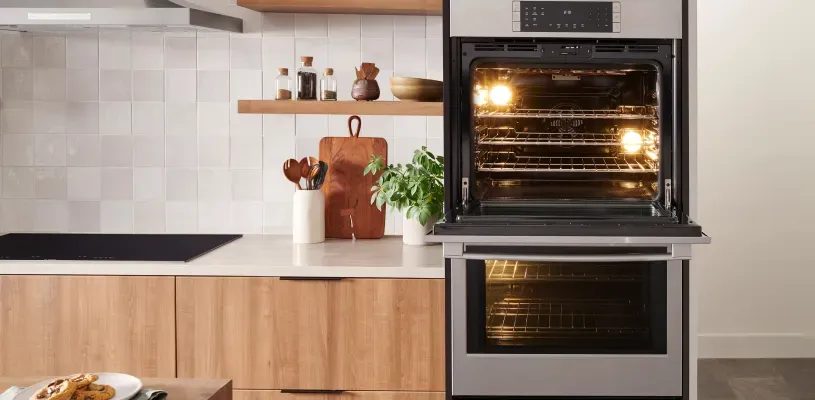
At its core, convection cooking relies on one key feature; a fan. Unlike a traditional (or “conventional”) oven, which uses stationary heat from the top and bottom elements, a convection oven uses a built-in fan and exhaust system to circulate hot air throughout the oven chamber.
This circulating heat ensures that food cooks evenly on all sides, without hot spots or uneven browning. The fan also helps maintain a consistent temperature, reducing cooking time and creating more reliable results whether you’re roasting vegetables or baking cookies.
There are two main types of convection systems you might encounter:
-
Fan Convection: Uses a fan at the back of the oven to circulate air.
-
True (European) Convection: Includes both a fan and an additional heating element behind it for more precise, even heat.
Most modern wall ovens and ranges now include convection modes, often allowing you to toggle between conventional and convection settings.
How Convection Differs from Conventional Cooking
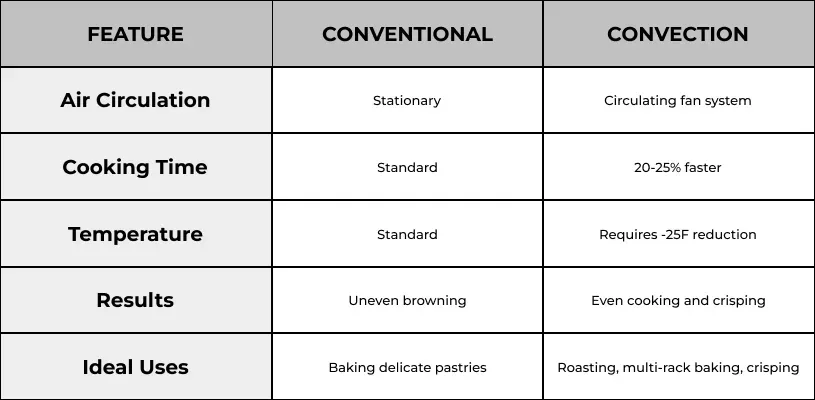
The biggest difference between convection and conventional ovens lies in air movement. In a conventional oven, hot air rises to the top and cooler air sinks, creating temperature variations throughout the space. In contrast, convection ovens move that hot air consistently, ensuring every rack gets the same amount of heat.
Key Differences:
The Benefits of Convection Cooking
Faster Cooking
Convection ovens distribute heat more efficiently, which means food cooks quicker. This is especially handy for weeknight meals or large family gatherings where you need multiple dishes finished on time.
Even Baking and Roasting
No more rotating trays or guessing which rack is best, convection heat ensures uniform browning, even color, and consistent texture from edge to edge.
Enhanced Browning and Crisping
The continuous airflow removes excess moisture from the oven, helping to crisp up foods like roasted potatoes, baked chicken, and pastries. It’s perfect for achieving golden, flaky crusts and tender interiors.
Energy Efficiency
Because convection ovens cook faster and often at lower temperatures, they use less energy over time, a small but worthwhile advantage for eco-conscious households.
Multi-Rack Cooking
Convection’s constant air circulation allows you to bake on multiple racks at once without worrying about uneven results, a game-changer for holiday cookie baking or batch meal prep.
When to Use Convection Cooking
While convection is versatile, it shines in certain scenarios. Knowing when to use convection versus conventional settings can help you get the most out of your oven.
Best Times to Use Convection:
-
Roasting Meats & Vegetables: Convection heat caramelizes the surface while locking in moisture, giving you a crispy outside and juicy inside.
-
Baking Pies & Pastries: Promotes flakier crusts and even browning.
-
Cooking Casseroles & Lasagna: Helps evenly melt cheese and crisp edges.
-
Toasting or Dehydrating: The dry, circulating air is perfect for removing moisture efficiently.
-
Reheating Leftovers: Restores crispness without making food soggy.
When to Skip Convection:
For delicate items like soufflés, custards, cakes, or quick breads, the fan’s airflow can sometimes cause uneven rise or drying. In those cases, sticking to the traditional bake setting is best.
Tips for Convection Cooking Success
-
Use the Right Cookware: Low-sided baking sheets and shallow pans allow air to circulate freely. Avoid deep dishes unless specified by the recipe.
-
Adjust Time and Temperature: Reduce temperature and check on whether your recipe is done a few minutes early to ensure quality.
-
Don’t Overcrowd the Oven: Air needs space to move, so keep pans a few inches apart.
-
Choose True Convection for Precision: If your oven offers it, the additional heating element behind the fan provides superior consistency.
-
Keep It Clean: Regularly clean the fan area and interior to ensure unobstructed airflow and prevent lingering odors.
Modern Convection Ovens You’ll Find at Standard TV & Appliance
Here are a few standout convection ovens that combine powerful performance with modern style:
KitchenAid 30” Smart Electric Double Wall Oven (Model #KOED730SPS): This KitchenAid model is built for multitasking. Run a roast in one oven while baking dessert in the other. With True Convection and matching styling to KitchenAid ranges, it delivers consistent results and elegant integration into wall-mounted cabinetry.
GE Profile 30" Smart Built-In Convection Double Wall Oven (Model #PTD7000SNSS): This double wall oven offers enhanced flexibility. Roast in the top while baking dessert in the bottom. True European Convection ensures reliable, even results every time, and built-in WiFi lets you control settings from your smartphone or voice assistant.
Bosch 800 Series 30" Stainless Steel Built-In Double Oven (Model #HBL8651UC): Combining precision and style, Bosch’s 800 Series double oven includes a genuine European convection system for perfect roasting and baking. Its touch controls and smooth, modern aesthetic make it a centerpiece of any kitchen.
Convection Cooking and Other Features to Consider
When shopping for a new oven, you’ll notice that convection cooking often comes paired with other high-end features. Keep an eye out for:
-
Steam Bake Modes: Help lock in moisture while still achieving golden finishes.
-
Air Fry Settings: Use convection power to deliver crispy fried results without excess oil.
-
Smart Connectivity: Remote monitoring, voice control, and guided recipes make cooking simpler than ever.
-
Dual-Fuel Options: Combine gas cooktops with electric convection ovens for the best of both worlds.
Is Convection Cooking Right for You?
If you love baking, roasting, or cooking efficiently, convection ovens are absolutely worth considering. They offer faster, more even results and give you professional-level performance right at home. Whether you’re upgrading your wall oven or investing in a new range, choosing a model with convection can elevate every meal, from weeknight dinners to weekend feasts.
Explore Convection Oven Solutions and More at Standard TV & Appliance
Whether you’re roasting, baking, or perfecting your favorite recipes, a convection oven can completely elevate your kitchen experience. At Standard TV & Appliance, you’ll find a wide selection of top-rated convection ovens and ranges from trusted brands like KitchenAid, GE Profile, Bosch, and more, all designed to help you cook smarter and faster.
We also offer cooking appliance options to accommodate different style and cooking type preferences, with selections in ranges, ovens, cooktops, microwaves, and more.
Visit one of our store locations in Beaverton, Bend, Wilsonville, or Portland, Oregon or explore our collection online to discover the perfect convection appliance for your home. Our expert team is ready to help you compare models, understand features, and find the best fit for your cooking style.
Related readings from our blog:
FAQs: What is Convection Cooking?
What is convection cooking?
Convection cooking uses a fan (and sometimes an extra heating element) to circulate hot air around the oven, producing more even heat and faster cooking compared with a conventional oven.
Can I use multiple racks with convection?
Yes, that’s one of convection’s strengths. The circulated air helps ensure uniform results on multiple racks, just leave space between pans so air can flow freely.
Does convection cook food faster?
Typically yes. Convection can reduce cooking times by roughly 20% and often allows you to cook at lower temperatures while getting the same (or better) results.
Is convection more energy efficient?
Often it is, because it cooks faster and at slightly lower temperatures, it can use less overall energy for the same dish compared with conventional baking.
Does convection dry out food?
Convection removes surface moisture more quickly, which helps crisp and brown foods. For some delicate items, you may want to use conventional settings or reduce time/temperature to prevent overdrying.
Related Articles